Graphcore

A data graph that loosely resembles a planetary environment micro-dosing on LSD maps the complex inner workings of a new ‘IPU’ chip.

  • Words: Jack Needham
  • Image: Graphcore

Androids may dream of electric sheep, but inside the mind of the machine learning visualisation software ‘Poplar’, you’ll discover a blooming micro-climate of fluorescent digital neurons and coral-like computerised patterns drenched in a UV glow. Poplar was created by the Bristol-based company Graphcore, a team formed of engineers, developers and several four-legged mascot puppies.
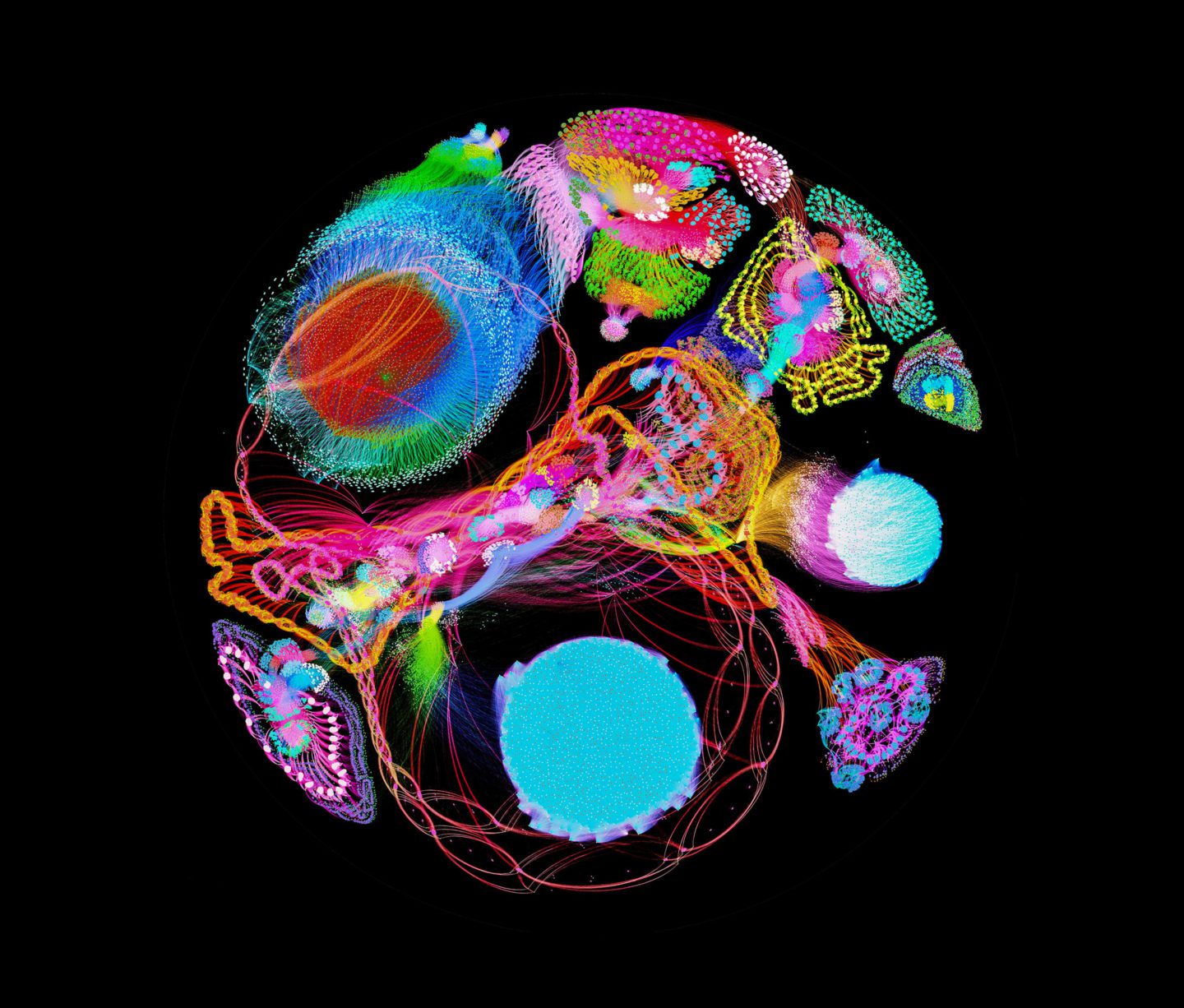
In simple terms Poplar is a data graph, albeit an abstract one, built as a way of visualising the complex inner workings of Intelligent Processing Units (IPU) which process visual data; an MRI scanner for an artificially intelligent ‘brain’, if you will. Resembling a planetary environment micro-dosing on LSD this particular graph is a mapping of the deep learning tool ResNet 18 and the routes their IPU’s follow to communicate with themselves. Here, millions of vertices and edges have been converted to further understand, and make understandable, how machines process thought and reason in technicolour.

Article taken from
Articles

Further Reading

Pyrogeography

The opening of a major new centre for the study of wildfire in London this year is the latest admission of the impact it is having on society and the environment.

Strife on Mars

For decades it has been assumed that the first nation to land on Mars will be the US or Russia, but China may have seized the advantage

A Hundred Hills

Photographer Jack Davison captures a styled journey in the hills of Yr Wyddfa, Snowdon, Snowdonia.

Polar Deficits

A powerful new short film highlights the brutal realities facing a species struggling for survival, seen through the eyes of the people who are dedicating their lives to halting the unthinkable.

Bach to the Future

An attempt to reach out to aliens becomes a retro-hit more than four decades after its launch.

Up Close: Blue Room

The science behind absorbing radio waves in a Radio Anechoic Chamber dates back to World War II when it first helped planes absorb or scatter radar signals. Now the technology is used by the European Space Agency among others.
Browse by Category